


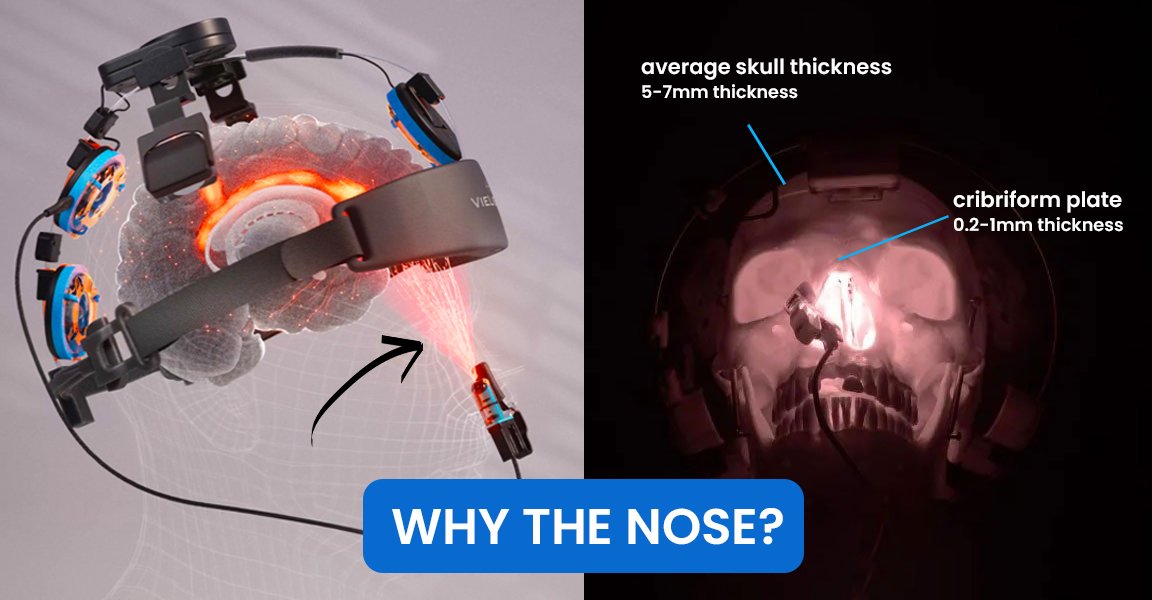
The nose is a gateway to important brain structures located at the underside of the brain, otherwise, unreachable from the scalp.
Can light energy reach the brain from the nose?
The layer of skull, just above the nasal cavity and below the brain (the cribriform plate) is extremely porous, delicate and thin. The thin, perforated structure of the cribriform plate can be as thin as 0.2 millimeters (other parts of the skull average 5-7mm). [1]
Due to its thin structure and multiple openings for olfactory nerves, the cribriform plate allows substantial 810nm light from an intranasal source to reach the olfactory system and nearby prefrontal cortex. [2]
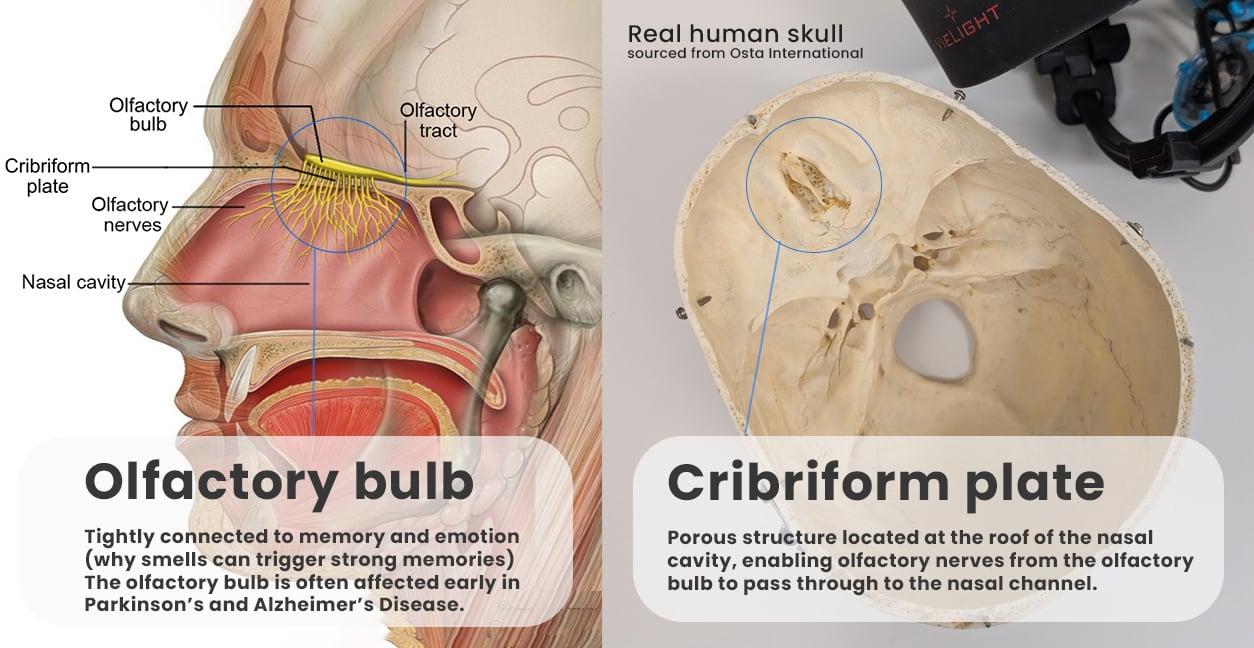
In the context of brain photobiomodulation, this thin structure makes it very permeable for NIR energy to reach the ventral prefrontal medial cortex (vmPFC) a region of the brain located just above the nasal cavity. It is believed that in adult mammals, neurogenesis occurs only in the olfactory bulb and in the dentate gyrus of the hippocampus. [3]
Explainer animation with real skull anatomy and demonstration:
Why the Nose and Olfactory Bulb?
Photobiomodulation (PBM) delivered intranasally isn’t just about convenience, it’s about strategic access to the brain. The nose provides a direct channel to key brain regions via the cribriform plate, making it a highly efficient route for delivering near-infrared (NIR) light to areas that are crucial for cognition, emotion, and systemic regulation.
Let’s explore three major brain structures located near this nasal entry point:
1. Ventromedial Prefrontal Cortex (vmPFC)
Function:
-
Responsible for decision-making and risk assessment
-
Integrates emotional and reward-related information for complex behavioral choices
Clinical Note:
Dysfunction in the vmPFC has been associated with mood disorders, impulsivity, and impaired judgment, often seen in conditions such as depression and PTSD.
2. Olfactory Bulb
Function:
-
Closely linked to memory and emotion
-
Explains why certain smells can trigger vivid memories or emotional responses
Clinical Note:
The olfactory bulb is frequently one of the first regions affected in neurodegenerative diseases like Parkinson’s and Alzheimer’s, making it a valuable target for early intervention.
3. Hypothalamus
Function:
-
Acts as the brain’s master regulator of homeostasis
-
Controls essential functions such as temperature regulation, appetite, circadian rhythms, hormone balance, and stress response
Clinical Note:
Because of its central role in systemic regulation, the hypothalamus is an attractive therapeutic target for interventions seeking to influence brain-body balance.
Key Functions of the vmPFC
- Emotion Regulation: The vmPFC helps modulate emotional responses, often interacting with the amygdala, which is involved in processing emotions like fear and aggression. It helps downregulate excessive emotional responses.
- Decision-Making: This region is critical for value-based decision-making, where choices are made based on the predicted value of different outcomes. It weighs rewards, punishments, and social factors in decision processes.
- Social Cognition: The vmPFC contributes to understanding social norms, empathy, and moral reasoning. It helps individuals make appropriate social decisions and understand the feelings and intentions of others.
- Memory Integration: It integrates emotional and social information from past experiences to guide future behavior and decisions.
Vielight Patented Intranasal Technology
Our patented intranasal technology enables NIR light energy to diffuse through the nasal channel, to the brain’s vMPFC, which is a crucial component of the Default Mode Network.
Watch this demonstration with Vielight intranasal technology on a real human skull:

Figure 1: Vielight Intranasal
Penetration of NIR energy through the nasal channel through the cribriform plate.
References


